Nobody in that conference room moved.
Xavier's mother made a sound like a sob and grabbed his arm. Carmen Delgado crossed herself. Dr. Ward stood up from her chair, her hand over her mouth.
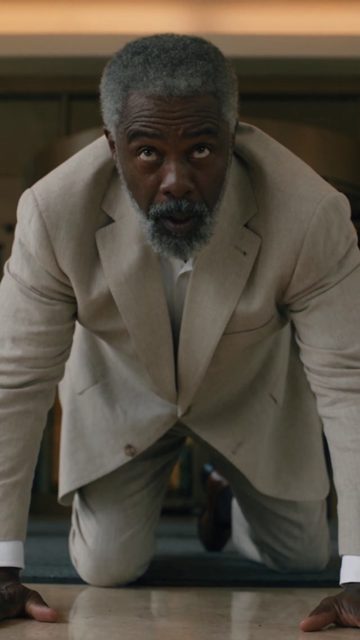
Otis stared straight at Heather Dunn. His eyes were clear and furious.
"She took... my watch," he said again. Clearer this time. "Gold. My... name... on back."
Heather's face went white. "He's confused. He's had a stroke, he doesn't know what he's..."
"Ms. Dunn," said Ms. Abernathy. "Sit down."
It took the police two days.
There were only four pawn shops within ten miles of the hospital. The third one had it. A gold watch with OTIS L. FREEMAN, 34 YEARS OF SERVICE, U.S. POSTAL SERVICE engraved on the back. Pawned for one hundred and eighty dollars, nineteen days earlier. The pawn slip had a photocopy of the seller's driver's license on it.
Heather Ann Dunn.
The hospital fired her that afternoon. Not suspended. Fired. The state nursing board suspended her license the following week, pending a full investigation. She was charged with theft from a vulnerable adult and falsifying medical records. Her lawyer worked out a plea in the spring. She'd never work as a nurse again.
Richard Dunn resigned before the board could vote on him. The official statement said he was "retiring to spend more time with family."
Dr. Monica Ward was reinstated with an apology in writing from the hospital president. A month later, they asked her to lead a new patient safety committee. The first rule she wrote: no nurse could sign off on care without a second person verifying it in the room.
The nine families got settlements. Carmen Delgado used part of hers to take her mother home to Puerto Rico for the first time in twenty years.
Otis went to a rehab center across town, the best one in the state. The settlement paid for it.
He worked harder than anybody there. Two hours of speech therapy every morning. One hour of physical therapy every afternoon. His therapist said she'd never seen a stroke patient his age fight like that.
"Why you push so hard, Mr. Freeman?" she asked him one day.
Otis took his time. Words still came slow.
"Got... things... to say," he said. "Waited... long... enough."
By summer he could say full sentences. By fall he was walking with a cane. He wore the gold watch every single day. Sometimes Xavier would catch him in the middle of a conversation, just running his thumb over the engraving on the back.
Dr. Ward came to visit him every few weeks. She brought him peppermints. He made her sit and listen to stories about the post office in 1971. She never once looked at her own watch.
Xavier quit his IT job the next January.
He enrolled in nursing school.
His mother cried. His friends thought he'd lost his mind. "You're gonna change bedpans?" one of them asked him. "Bro. You make good money fixing computers."
"Somebody's gotta do it right," Xavier said.
It took him two and a half years. He studied at the kitchen table at night with his grandfather sitting across from him, quizzing him off flash cards. Otis got every answer wrong on purpose just to watch Xavier explain it again.
When Xavier graduated, Otis stood up from his wheelchair in the second row and walked to the end of the aisle with his cane, by himself, so he could hug him first.
On his third week as a nurse, Xavier was assigned to a room on the fourth floor of St. Augustine.
Room 412.
The patient was an eighty-four-year-old white man named Clifford. A retired trucker from Tennessee. Hip replacement. His family lived three states away. Nobody had visited in five days.
Clifford was grumpy. He yelled at the TV. He complained about the Jell-O. When Xavier came in to check his IV and turn him, Clifford looked him up and down and grunted.
"Didn't expect a fella like you to be my nurse."
Xavier smiled. He'd heard worse.
He changed Clifford's sheets. He checked the bag. He turned him gently onto his side, every two hours, all night long, and he wrote it down only after he'd done it. He brought him an extra blanket when the air conditioning got too cold. He sat for ten minutes at four in the morning and listened to a story about a truck stop in Memphis.
On the third morning, Clifford caught his arm as he was leaving.
"Son," the old man said. "You people..." He stopped. He seemed to hear himself. He started over. "You're a good nurse. Best one I've had. I'm grateful."
Xavier shook his head.
"You don't have to be grateful, Mr. Clifford," he said. "This is just how it's supposed to be."
He picked up the chart, checked the box only after he'd done the work, and initialed it.
X.F.
Then he went down the hall to the next room, where somebody else's grandfather was waiting.
So what do you think? Was Dr. Ward right to fire Heather on the spot, or should there have been an investigation first? Tell us in the comments.
Was firing Heather on the spot the right call?
Thanks for voting. Tell us why in the comments on our page.
This is a fictional story. Names, characters and events are invented. Any resemblance to real people or events is coincidental.