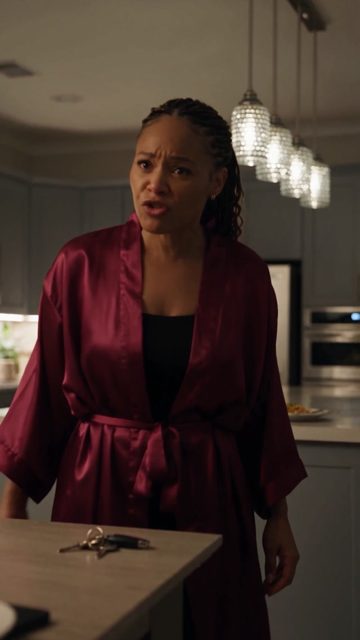
"Nineteen thousand," Vic said, nodding at the envelope. "You didn't have to dress up for me."
"I came from work," Imani said. "Where you took my picture."
He shrugged. "Business."
She put the envelope on the table between them. She kept her hand flat on top of it.
"Before I give you this," she said, "I want to understand something. You lent my husband fourteen thousand dollars. You knew he was already broke. You knew he'd lose it."
"Everybody loses eventually," Vic said. "That's the game."
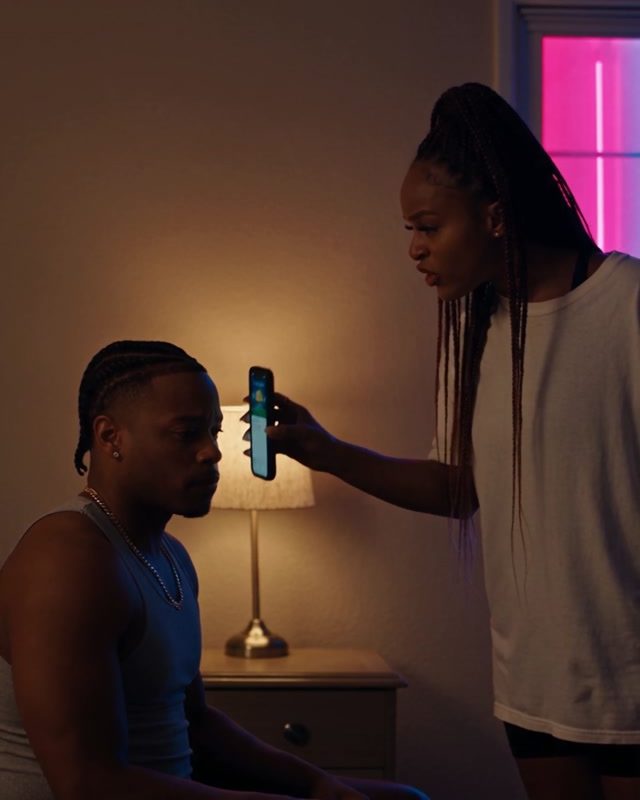
"And when he couldn't pay, you came into my house at night. And you left a picture of me on my bed. So I'd know you could find me."
Vic leaned back, relaxed, and took a sip of coffee.
"Mrs. Jenkins, I'm a reasonable guy. I don't hurt people who pay me." He smiled. "I just make sure they remember to."
"Okay," Imani said.
She took her hand off the envelope.
Vic reached for it, opened the flap, and looked inside.
It was full of blank paper. Cut to the size of hundred-dollar bills.
He looked up at her. And for the first time, his face wasn't calm.
"I'm not paying you a dime," Imani said. "And everything you just said is on a recorder in the booth behind you."
Detective Alvarez stood up from the next booth over. Two uniformed officers came in from the kitchen. A third was standing at the front door.
Vic didn't run. He was smart enough not to. He just sat there and looked at Imani, and she looked right back at him, and she didn't blink.
"You should've stayed out of my bedroom," she said.
They found fifty-two thousand dollars in cash and three handguns in the back office of the car wash on Route 9 that evening. And a notebook full of names. Marcus's was on page eleven.
Victor Sena took a plea deal in the spring. Six years.
Marcus testified. That was the deal Imani made with him the night before the diner, sitting at the kitchen table.
"You're going to tell the truth," she said. "To the police. To the bank. To the fraud department about that loan. All of it. You're going to sign every paper they put in front of you."
"And then?" he'd asked. "Then can we..."
"And then you're going to find a meeting. Gamblers Anonymous. Tomorrow. Not next week."
He found one. In a church basement on Fifth Street, Tuesday and Thursday nights. He went the next day.
He moved out in November, into a room at his cousin's place. The bank forgave the forged loan once he confessed in writing, but they closed every account with his name on it. He got a second job driving deliveries at night. Every two weeks, without missing once, he sent Imani money. Two hundred. Three hundred. Toward the twenty-eight thousand.
She didn't ask him to. She didn't stop him either.
The little blue house on Delmar Street sold to somebody else.
Imani cried about that more than she cried about anything else. More than the money. More than Vic. That stupid lemon tree.
A year and a half later, she closed on a one-bedroom condo on the other side of town. Her own name. Her own down payment. Her own signature, with the little loop at the top of the I.
On move-in day, there was a small box on the doorstep. No note. Just a little potted lemon tree, about a foot tall, and a bronze coin tied to it with a ribbon.
The coin said 1 YEAR on one side.
On the other side were the words of the prayer they say at the end of every meeting in that church basement.
Imani stood on the step and held that coin for a long time.
She planted the lemon tree on her balcony. It's three feet tall now.
She still hasn't called him.
But she hasn't sent the coin back, either.
So what do you think? Should Imani give Marcus another chance, or did he lose her the night he bet their home?
Should Imani take Marcus back?
Thanks for voting. Tell us why in the comments on our page.
This is a fictional story. Names, characters and events are invented. Any resemblance to real people or events is coincidental.