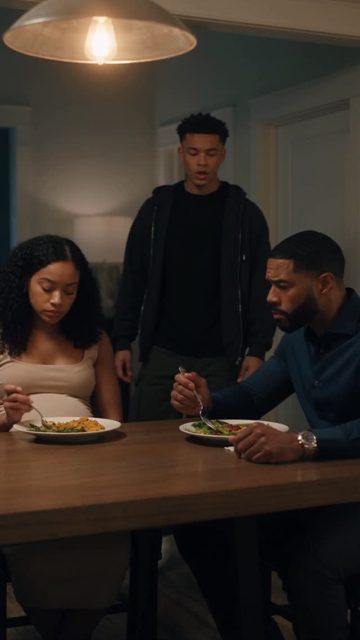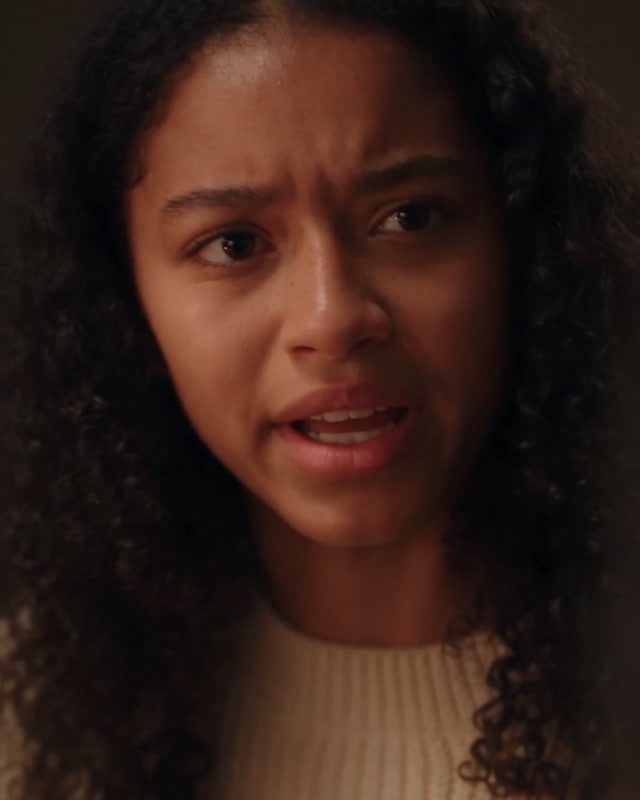
"Andrea," Paul said quietly. "What cards?"
Andrea didn't answer.
On the speaker, Nina's father said, "Nina? You still there?"
"I'm here," she said. "Can I call you back? Like, in an hour? Please don't..."
"I'm not going anywhere," he said. "This number's been the same for sixteen years. That was on purpose."
The call ended.
The candles had burned all the way down. Little puddles of colored wax sat on top of the frosting. Nobody had blown them out.
"Mom."
Andrea pushed her chair back and stood up. For a second Nina thought she was going to walk out of the room. Instead, she went to the stairs, and they heard her climb up, and then they heard the attic door creak open.
Paul and Nina sat in silence.
"I swear I didn't know," Paul said. "About the cards. I knew about him. I knew about your brother. Your mom said it wasn't safe. That he wasn't a good man. I didn't ask more. I should have."
When Andrea came back down, she was carrying a shoebox. A plain white Nike box with the lid taped shut. She set it on the table in front of Nina and sat down without a word.
Nina peeled the tape off.
Envelopes. Stacks of them. Every color. Every one addressed in the same blocky handwriting to Miss Nina Grace Jessup. Some were opened. Most weren't. In the corner of each one, a return address. Raymond Jessup, Baltimore, Maryland.
Nina picked up the top one. Postmarked last week.
Inside was a card with a cartoon giraffe on it. Happy Sweet Sixteen. And a folded note.
Nina, I don't know if you'll ever read these. I hope you're happy. I hope you're loved. I hope you know that I never stopped being your daddy, even from far away. Isaiah says happy birthday too. He's in his last year of college. He's going to be a teacher. You'd like him. Love always, Dad.
There was a twenty-dollar bill folded inside.
Nina opened another one. And another. Five years old. Ten years old. Thirteen. Every single one had a twenty-dollar bill and a note. Some had drawings from a little boy. A stick figure family. A green crayon dinosaur. To my baby sister from Isaiah.
"You kept these," Nina said. "You read them. And you kept them in a box in the attic."
"I was protecting you," Andrea said.
"From what? A giraffe card?"
"From him." Andrea's voice was rising. "You don't know what it was like. He drank, Nina. When you were a baby, he drank all the time. He crashed the car into a pole with Isaiah in the back seat. Isaiah needed eleven stitches. I couldn't live like that. I couldn't let you live like that."
Paul turned. "You never told me that."
"Because it was over. I left. I started over. I met you. I built a life."
Nina picked up another card. A Christmas one. Inside, along with the twenty, there was a little bronze coin taped to the paper. On it, the number two and the words Unity, Service, Recovery.
She held it up. "What's this?"
Paul looked at it. His jaw got tight.
"That's a sobriety chip," he said. "Two years."
Nina dug through the box. There were more coins. Taped inside cards, year after year. Three years. Five years. Ten years. And in this week's giraffe card, taped to the bottom of the note, a coin that said fourteen.
"Fourteen years," Nina said. "He's been sober fourteen years. And he sent you proof. Every year."
Andrea didn't say anything.
"And Isaiah," Paul said. His voice was very calm. Too calm. "Why didn't Isaiah come with you, Andrea? If his father was so dangerous?"
Andrea covered her face.
"Because I was twenty-six," she said through her fingers. "Because I was broke. Because I had a baby and no job, and Ray's mother said she'd help raise Isaiah until Ray got clean. And Isaiah screamed when I tried to put him in the car. He didn't want to leave his daddy. So I left him. I told myself it was just for a few months."
She dropped her hands. Her face was soaked.
"And then a few months became a year. And Ray got sober and started writing, and every letter made me feel like a monster. So I stopped reading them. I moved twice. I changed my number. And every year I told myself, next year. Next year I'll tell her. Next year I'll call him."
She looked at the box.
"I picked one child and left the other one. How was I supposed to explain that to anybody?"
Nobody had an answer.
Nina wiped her face with her sleeve. Then she picked up her phone, and this time she dialed herself. The number was right there, on the back of every single envelope.
"Dad? It's me again."
"I'm here."
"I want to meet you. And Isaiah. Can I come to Baltimore?"
She heard him put the phone down. She heard a muffled voice in the background. A younger man's voice. Asking who it was.
When her father came back on, he sounded careful. Like he was choosing every word.
"Baby, I'd love that more than anything in this world. But I gotta be honest with you about something first."
"What?"
"It's your brother," Raymond said. "He just heard everything. And he says he doesn't want to meet you."
In the background, clear as day, Nina heard the younger voice again.
"Why would I want to meet the one she picked?"
This is a fictional story. Names, characters and events are invented. Any resemblance to real people or events is coincidental.