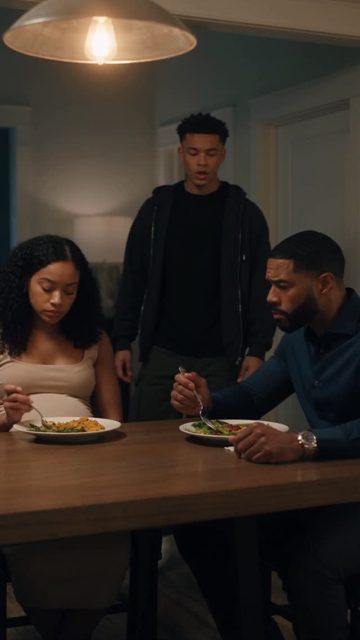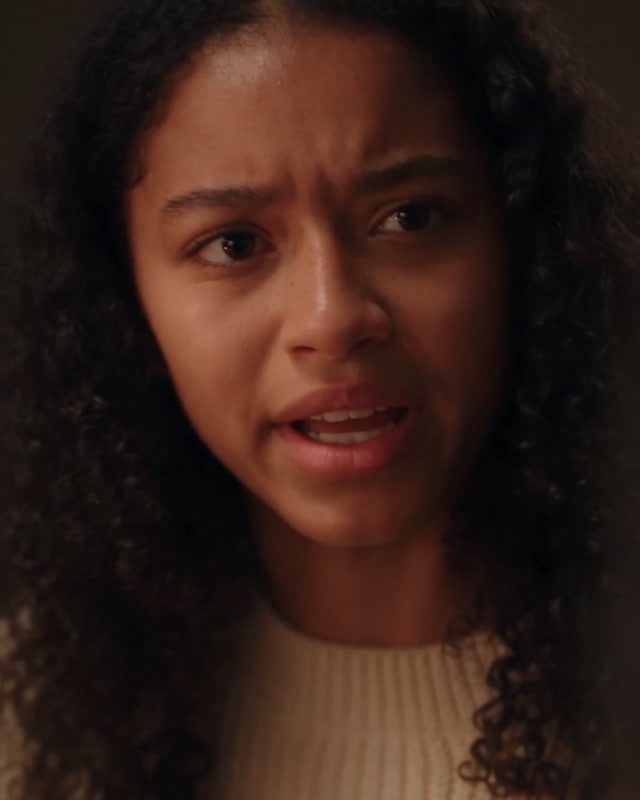
They drove to Baltimore anyway.
Four and a half hours. Paul drove. Nina sat in the front seat with the shoebox in her lap. Andrea sat in the back, staring out the window, and nobody tried to make her talk.
Raymond's house was a narrow brick rowhouse with a red door and three potted plants on the steps. He was waiting on the top step before they even parked.
He was older than the picture. Gray in his beard. Reading glasses pushed up on his head. But the smile was the same, and when Nina got out of the car, he didn't move. He just stood there with his hand over his mouth.
She walked up the steps. She stopped in front of him.
"Hi," she said.
"Hi, baby."
Then he hugged her. And Nina, who had told herself the whole drive that she would be cool about it, cried into his shirt like she was five.
Over her shoulder, Raymond looked at Andrea standing by the car.
"Andi," he said.
"Ray."
That was all. Sixteen years, and that was all either of them could manage.
Paul walked up the steps and held out his hand. "Paul Bennett."
Raymond looked at the hand. Then he took it, and held on.
"You raised my daughter," he said.
"I did my best."
"She's beautiful. She's polite. She drove four hours to meet a stranger." Raymond's voice cracked. "That's not my best. That's yours. Thank you."
Paul nodded. He couldn't talk either.
Isaiah wasn't there.
"He's at the school," Raymond said. "He coaches the middle school basketball team on Saturdays. He said he'd be back. He didn't say when."
They waited three hours.
When the red door finally opened, it was almost dark.
Isaiah Jessup was twenty-one, tall like his father, in a gray hoodie with a whistle still hanging around his neck. He stopped in the doorway and looked at all of them. At Raymond. At Paul. At Nina, standing up from the couch.
And at Andrea.
He looked at Andrea for a very long time.
"So you came," he said to her. Not to Nina. To her.
"I came," Andrea said.
"Sixteen years late."
"I know."
"I used to sit by the window," Isaiah said. His voice was flat, like he'd practiced this. "Every Saturday. Grandma told me you'd come back for me. I was six. I sat there every Saturday for two years until she finally told me to stop."
Andrea's shoulders shook.
"You took the baby," Isaiah said. "And you left me. I always wanted to know why. Why her and not me?"
"Because I was a coward," Andrea said. "Not because of you. Never because of you. I didn't pick her over you, baby. I just ran, and she was the one in my arms."
Isaiah looked away.
Then Nina stepped forward. She was holding something. Not the shoebox. Something she'd found in Andrea's nightstand the night before they left, while her mother was asleep.
A second shoebox. Smaller. Blue.
"There's something you need to see," Nina said.
She opened it and held it out.
Envelopes. Stacks of them. Addressed in Andrea's handwriting. Every one to Isaiah Jessup. Every one stamped. None of them mailed.
"She wrote you too," Nina said. "Every birthday. Every Christmas. Sixteen years. She just never had the guts to send them."
Isaiah took the box. He picked up an envelope. Happy 7th birthday, baby boy.
He didn't open it. He just held it.
"Why didn't you send them?" he asked his mother.
"Because every one of them said I'm sorry," Andrea whispered. "And sorry wasn't enough. I knew it wasn't."
Isaiah sat down on the arm of the couch. He stared at the box in his hands for a long time.
Then he looked up at Nina.
"You're shorter than I thought you'd be," he said.
Nina laughed. It came out as a sob. "You're meaner than I thought you'd be."
"Yeah," Isaiah said. And for the first time, he almost smiled. "I get that from Dad's side."
From the kitchen doorway, Raymond laughed so hard he had to hold onto the counter.
It didn't get fixed in one night. It took a long time.
Isaiah read one of Andrea's letters a month. Not more. He said that was all he could handle. Some months he called her after. Some months he didn't.
But in March, he drove down for Nina's spring track meet and yelled so loud from the bleachers that her coach asked who he was.
"That's my brother," Nina said. She liked the way it sounded.
Raymond came for Thanksgiving. He and Paul argued about football for six hours and then fell asleep on opposite ends of the couch, both with their mouths open. Nina took a picture.
She called them both Dad. Nobody ever got confused.
On Isaiah's twenty-second birthday, the whole family squeezed into the little rowhouse in Baltimore. There was a cake with candles. Roast chicken. Mashed potatoes. The good plates.
Nina came in from the hallway holding a brand new album.
"Look what I found," she said.
Isaiah opened it on top of his plate.
The first page was the old Easter picture. Raymond in the grass. Isaiah with no front teeth. Baby Nina in pink.
The second page was the picture from Thanksgiving. Two dads asleep on a couch.
And on the third page, Nina had glued a picture from that afternoon. All five of them on the red front steps, squinting into the sun. Andrea and Isaiah were standing next to each other. Not touching. But close.
Underneath it, in Nina's handwriting: Everybody. Finally.
So what do you think? Was Andrea wrong to hide the truth all those years, or was she just a scared mom trying to protect her kids? Tell us in the comments.
Was Andrea wrong to hide the truth?
Thanks for voting. Tell us why in the comments on our page.
This is a fictional story. Names, characters and events are invented. Any resemblance to real people or events is coincidental.