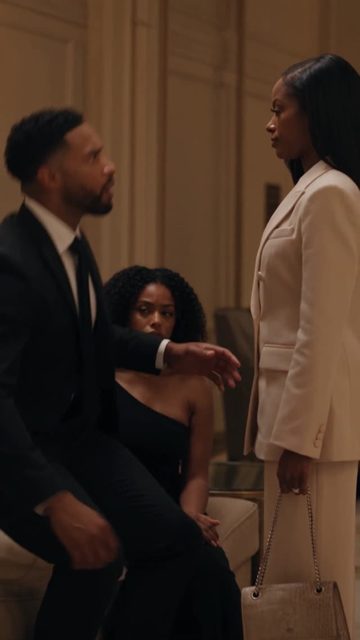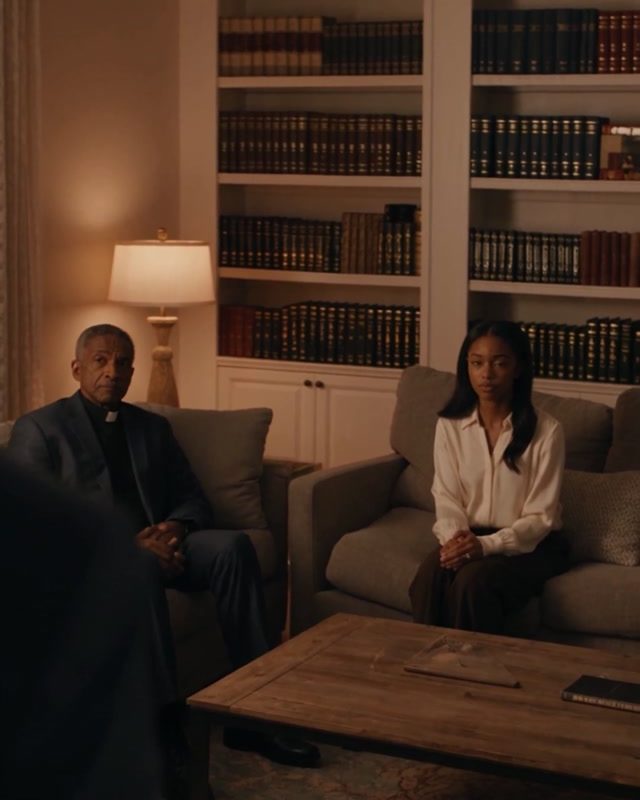
Gregory walked into the bank at 8:58.
Simone was sitting alone in the lobby. Raymond was at the counter, chatting with the manager, wearing his Sunday smile.
Simone stood up when she saw her dad. Her eyes were red.
"I found the bank letters in his car last night," she whispered. "The church. The loans. Dad, I think he..."
"I know, baby," Gregory said. "I know."
Raymond turned around. For one second his face slipped. Then the smile came back.
"Gregory! What a blessing. Simone and I were just..."
"Just opening a joint account," Gregory said. "So the trust can go in it. So you can pay off a million dollars in church debt before the bank takes your building."
The manager took a slow step back.
Raymond's smile was gone. "That's a lie."
"Then tell her," Gregory said. "Look my daughter in the eye and tell her you married her for love."
Raymond looked at Simone.
He didn't say a word.
He didn't have to.
Simone slid the ring off. She set it on the counter, very carefully, like it was hot.
"I trusted you my whole life," she said. "You held me when I was a baby. You prayed over my mother's casket."
"Simone, the church... all those families... I did it for them..."
"No," she said. "You did it for you."
The marriage was annulled six weeks later. Lorraine told the church board everything. Raymond resigned before they could vote him out.
The church got a new pastor, and the congregation raised the money to save the building on their own. One bake sale, one donation, one Sunday at a time.
Simone moved back home for a while. Some nights she and Gregory sat on that same couch and didn't say anything at all.
"I'm sorry I didn't come to you first," she said one night.
"I'm sorry you felt like you couldn't," he said.
She moved to Atlanta in the spring. The trust is still untouched.
So who was wrong? Simone for marrying in secret, Raymond for his hidden reason, or Gregory for not seeing it sooner?
Who was wrong?
Thanks for voting. Tell us why in the comments on our page.
This is a fictional story. Names, characters and events are invented. Any resemblance to real people or events is coincidental.